
Juan Ignacio Ramón 801 ote. Col: Centro, Monterrey Nuevo León.

Call us now!

(81)033180

Trump Eases Tariffs on USMCA Auto Parts Amid Mounting Trade Pressure

After slapping 125% tariffs on China and 25% duties on steel, aluminum, and vehicles, Trump now grants “conditional relief” to Mexico and Canada. A real break or a new compliance test for the auto industry?
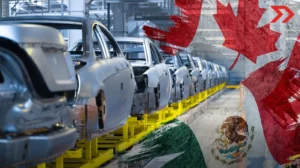
In just eight weeks, President Donald Trump has reshaped the global trade landscape: he imposed a 125% tariff on Chinese imports, enforced a 25% duty on steel, aluminum, and vehicles, and reignited tensions with key economic partners. But now, in what appears to be a strategic (and politically calculated) pivot, Trump has signed a new executive order easing some of these restrictions for Mexico and Canada, specifically for the automotive sector.
This latest measure does not eliminate tariffs outright—it introduces a phased exemption with strict conditions, including high regional content requirements for vehicles assembled in the U.S. The message is clear: the White House wants to reshore manufacturing without fully alienating its USMCA allies.
What does the new order say?
The updated provisions affecting Mexican and Canadian auto parts include:
• Full tariff exemption during the first year (April 3, 2025 – April 30, 2026) if parts are used in vehicles assembled in the U.S. with at least 85% regional content under USMCA rules.
• For vehicles with a minimum of 50% regional content, the tariff will drop from the original 50% to 35%.
• A rebate program is also introduced:
a) 3.75% of the manufacturer’s suggested retail price (MSRP) during the first year.
b) 2.5% rebate during the second year (May 1, 2026 – April 30, 2027).
This announcement was made during a Michigan event marking Trump’s first 100 days in office, where he criticized Mexico for “absorbing 32% of U.S. auto production,” and claimed Canada holds another 12%.
What this means for Mexico?
Although the new policy was welcomed by government officials and industry players as a sign of easing, it introduces more rigorous compliance requirements that could prove challenging for current supply chains.
Key concerns for Mexican businesses include:
• Strict certification of origin under USMCA: It’s not just about compliance; companies must be able to prove it with documentation.
• Supply chain realignment: Firms must ensure parts and materials come from within the USMCA region, not from high-risk sources like China, currently hit with a 125% tariff.
• Operational and logistical traceability: Documenting the movement and origin of components may require additional investment in systems, supplier management, or local production.
Strategic recommendations
At Calderón Marín, we have identified three key action areas companies should prioritize now:
• Reconfigure sourcing strategies: Maximize use of regional inputs to push content levels beyond the 85% threshold.
• Reinforce technical and documentation controls: Perform internal audits, simulate verification processes, and seek expert support on USMCA compliance.
• Model financial impact scenarios: Assess profitability with and without tariff benefits to inform pricing and operational decisions.
This tariff relief isn’t a ceasefire, it’s a new set of rules for those ready to adapt. In today’s volatile and rapidly evolving trade landscape, companies that act quickly and decisively will gain a competitive edge.

At Calderón Marín, we’re ready to help you navigate this environment with comprehensive legal, fiscal, customs, and trade advisory services tailored to your industry and operations. Contact us today for a specialized assessment of your automotive exports and your compliance standing under the USMCA framework.

Related articles
Contact Us

Our office

Juan Ignacio Ramón 801 ote. Col: Centro, Monterrey Nuevo León.

Opening hours

Monday to Friday: 8:00 AM – 5:00 PM
Saturdays: Closed

Phone

(81)033180 – (81)033181