

Juan Ignacio Ramón 801 ote. Col: Centro, Monterrey Nuevo León.

Call us now!

(81)033180

Impact of the Judicial Reform on Foreign Direct Investment in Mexico

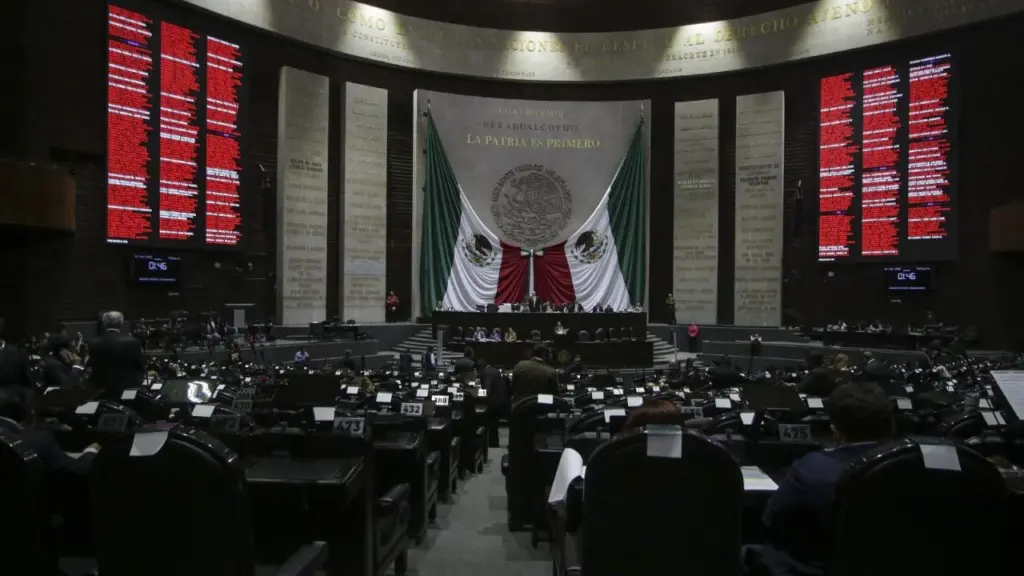
On Sunday, September 15, 2024, the day that commemorates Mexico’s independence, President Andrés Manuel López Obrador enacted the judicial reform in the Official Gazette of the Federation. Since its initial discussion, this reform has drawn attention both nationally and internationally, particularly among investors with interests in Mexico, due to its far-reaching implications that transcend the legal realm and could impact the perception of legal certainty, economic stability, and confidence in both national and foreign investments.


Mexico, as one of the 20 largest economies in the world, sees any shift in the balance of powers reflected in international markets. Any disruption to the economic and investment environment, both locally and globally, could have widespread repercussions.


It is essential to highlight the key aspects of the reform and its potential economic, tax, and investment consequences:

I.  Key Points of the Reform:

a)  Popular Election:

It is established that justices of the Supreme Court of Justice, counselors, district judges, and magistrates will be elected through direct popular vote, following the formation of shortlists with the participation of the Executive, Legislative, and Judicial branches. This has raised concerns about the potential loss of impartiality within the judicial system.

b) Reduction of Justices on the Supreme Court:

The number of justices on the Supreme Court is reduced from 11 to 9, with a term limited to 12 years, without the possibility of re-election.

c) Creation of New Regulatory Bodies:

Two bodies are created to replace the Federal Judiciary Council. One will be responsible for administration, and the other will be a Judicial Disciplinary Tribunal, tasked with overseeing the conduct of the judiciary. This tribunal will allow anyone, including authorities, to file complaints against judges and magistrates, including complaints about rulings.

d) Loss of Judicial Autonomy:

Critics have warned that the reform may increase the Executive’s influence over the Judiciary, undermining its independence and potentially causing judges to be more swayed by public opinion than by the law.

II. Controversies in Tax Matters.

Regarding disputes over tax contributions (as established by law), the reform mandates that administrative and judicial courts resolve these cases within six months. Failure to meet this deadline will require judicial bodies to report to the Judicial Disciplinary Tribunal and justify the delay, raising concerns that courts might favor tax authorities in many cases to avoid penalties. Experts suggest this could tip the balance in favor of the government in most tax rulings.

III. Economic and Foreign Investment Impact.

a) Exchange Rate:

Although factors such as the U.S. elections and global economic uncertainty also influence the exchange rate, it is estimated that 60% to 70% of the depreciation of the peso against the dollar is a result of the reforms pushed by President López Obrador, particularly the judicial reform. The exchange rate is projected to fluctuate between 19.70 and 21 pesos per dollar by the end of 2024.

b) Implications for the USMCA:

The reform could affect compliance with international agreements such as the USMCA, as investors from the U.S. and Canada have expressed concern about potential biases in Mexico’s justice system. The scheduled USMCA review in 2026 will likely take the effects of this judicial reform into account.

c) Foreign Investment on Hold:

Since its early stages, the judicial reform has caused concern among foreign authorities and investors. Faced with legal uncertainty, many have paused their investments in Mexico, waiting to assess the positive or negative impacts of the newly enacted reform.


It is estimated that approximately $35 billion from the U.S. alone is invested in Mexico; however, many of these investments are currently on hold.


Despite the logistical and geopolitical advantages Mexico offers, it is clear that enthusiasm for investing in the country has cooled. In the second quarter of 2024, foreign investment was valued at $264 billion, a 59% decrease compared to the $645 billion reported in the first three months of the year—the lowest figure since 2006.


Foreign investment in Mexico may face further challenges due to growing competition from U.S. border states, which are promoting themselves as alternatives for redirecting investments in light of the legal uncertainty currently present in Mexico. On the day the reform was passed, the Texas Public Policy Foundation announced that Texas is ready to receive investments that are redirected from Mexico due to the uncertainty created by the “radical judicial reform.”

d) Growth Slowdown:

Experts predict that following the judicial reform, Mexico may enter a prolonged period of economic stagnation, with the possibility of recession. Even before the reform’s approval, the Bank of Mexico had already reduced its GDP growth forecast from 2.4% to 1.5% for this year, and from 1.5% to 1.2% for 2025.

e) Use of Hedging Instruments:

In response to uncertainty, foreign investors will likely turn to currency hedging tools, such as Non-Delivery Forwards, to mitigate risks.

IV. Alternative Dispute Resolution Methods as a Solution for Foreign Investment.

In light of the legal uncertainty created by the judicial reform, both national and foreign investors have expressed concerns over the independence and effectiveness of the judicial system. As a result, alternative dispute resolution methods have emerged as a reliable option for conflict resolution, providing certainty to investors, particularly foreign ones, and helping to retain and attract investment to Mexico.


Among these methods, arbitration stands out as the most reliable due to its independence, neutrality, efficiency, confidentiality, flexibility, and international enforceability. Thus, commercial disputes of a contractual nature, where the amount justifies it, can be resolved expeditiously, confidentially, and by specialized arbitrators, safeguarding the interests of the parties amid legal uncertainty.


In Mexico, an arbitration process can be tailored by the parties or conducted through recognized arbitration institutions, both national and international, such as the International Chamber of Commerce, the National Chamber of Commerce, and the Mexican Arbitration Center. These institutions offer well-established procedural rules and expert arbitrators, both national and international, who can be appointed to conduct arbitration.


For arbitration to be fully effective, the parties must commit to voluntarily respecting and complying with arbitral awards, which are generally recognized and enforced under international agreements such as the New York Convention. This treaty, signed by numerous countries, facilitates the recognition and enforcement of arbitral decisions worldwide. This is crucial for foreign investors, who seek to ensure the effective enforcement of rulings globally, without relying solely on an uncertain Mexican judicial system. This approach minimizes the need to resort to courts and ensures quicker conflict resolution.

V. Next Steps.

Now that the reform has been enacted and is in force, it is expected that in 2025 both the justices of the Supreme Court of Justice, the magistrates of the new Judicial Disciplinary Tribunal, and the new Administrative Body will be elected, as well as half of the district judges and circuit magistrates. The remaining half will be elected in 2027. These elections will be organized by the National Electoral Institute.

At Calderón Marín, S.C., we are committed to helping our clients navigate these times of legal and economic uncertainty. We offer strategic solutions to protect investments, optimize operations, and mitigate risks in this changing environment. We remain at your service to advise you and assist in developing strategies that strengthen the stability of your business in Mexico.


Related articles
Contact Us

Our office

Calzada San Pedro Sur 105 – 101B, Col. Del Valle, San Pedro Garza García, Nuevo León México

Opening hours

Monday to Friday: 8:00 AM – 6:30 PM
Saturdays: 10:00 AM – 4:00 PM

Phone

(81)033180 – (81)033181